
Can You Sue a Non-Subscriber Employer After a Construction Injury in Texas?
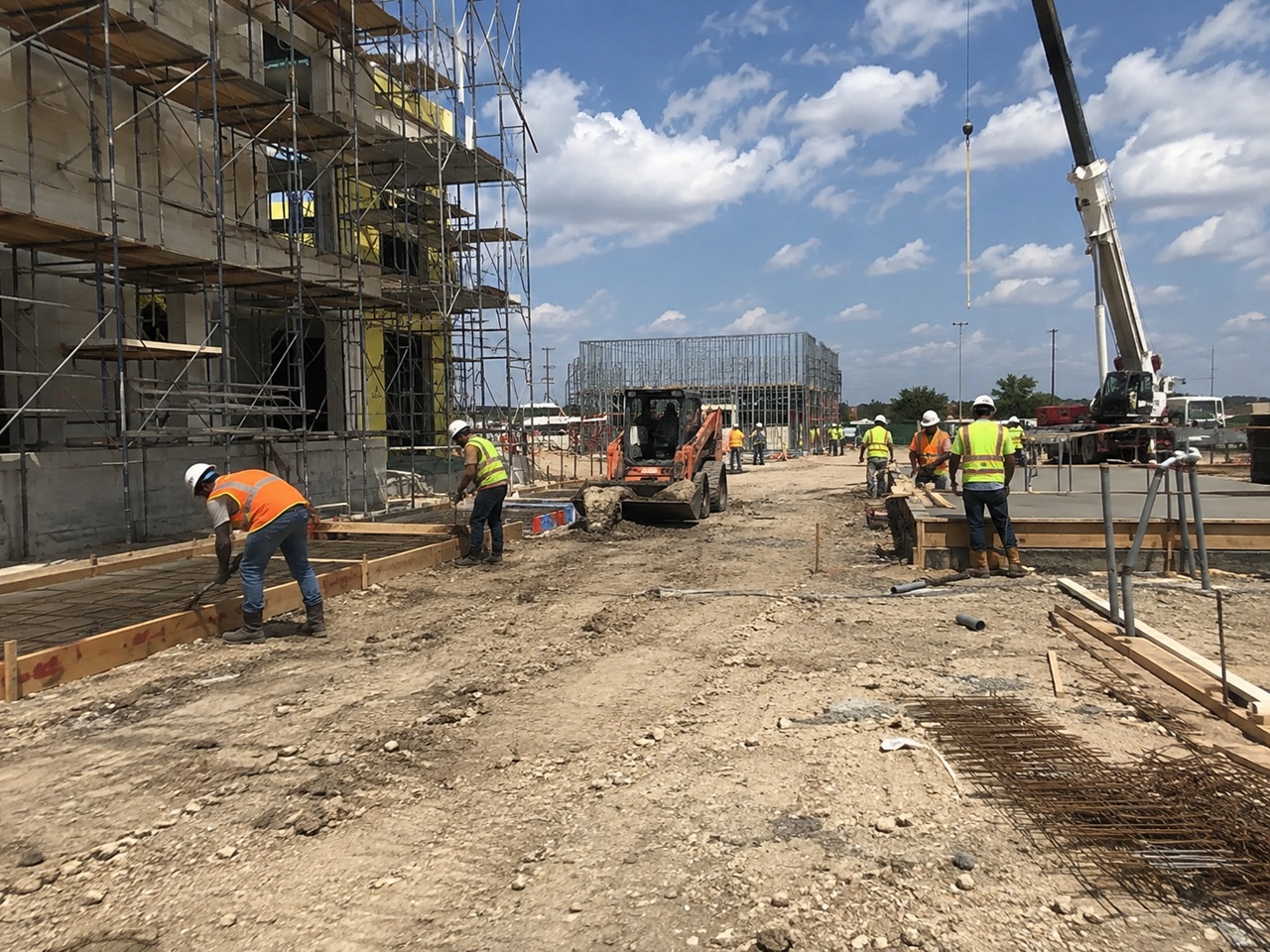
Texas Workers Can Sue A Non-Subscriber Employer When Employer Negligence Causes An Injury
A fall from scaffolding, trench collapse, electrical accident, or heavy-equipment incident can leave a construction worker facing months of treatment and time away from work. When the employer doesn't carry Texas workers' compensation insurance, the legal process works very differently.
In many cases, an employee can file a negligence lawsuit directly against a Texas non-subscriber employer.
That doesn't mean compensation is automatic. The injured worker generally has to prove that negligence by the employer, or someone acting for the employer within the scope of employment, caused the injury.
But Texas law also takes away several defenses that an ordinary negligence defendant might otherwise use. The result can give an injured construction worker significant rights that aren't available through a traditional workers' compensation claim.
John R. Solis, Attorney at Law, has spent more than 25 years representing injured Texans. Construction-site cases involving non-subscriber employers require an early review of insurance coverage, employment relationships, jobsite contracts, safety responsibilities, and any company that may have contributed to the accident.
What Is A Texas Non-Subscriber Employer?
Texas allows most private employers to decide whether they'll participate in the state's workers' compensation system.
An employer that chooses not to provide workers' compensation coverage is generally called a non-subscriber.
The Texas Division of Workers' Compensation requires non-subscribing employers to notify workers that they don't have Texas workers' compensation coverage. Employers also have reporting obligations to the state, including reporting certain workplace injuries, illnesses, and deaths.
A non-subscriber may still offer an occupational injury plan, medical benefits, wage replacement, or another private employee-benefit program. Those benefits don't necessarily amount to Texas workers' compensation coverage.
That's an important distinction because workers' compensation typically provides a subscribing employer with significant protection against negligence lawsuits. A true non-subscriber generally doesn't receive that same protection.
Construction Workers Should Verify Who Actually Provided Workers' Compensation Coverage
Construction projects can make the subscriber question more complicated than simply asking whether your direct employer bought its own policy.
Texas Labor Code § 406.123 allows a general contractor and subcontractor to enter into a written agreement under which the general contractor provides workers' compensation coverage to the subcontractor and the subcontractor's employees.
When the statutory requirements are satisfied, the general contractor can be treated as the employer of those workers for purposes of Texas workers' compensation law. That can make workers' compensation the exclusive remedy against a company that the injured worker might otherwise sue for negligence.
Project-wide programs, such as owner-controlled or contractor-controlled insurance arrangements, can raise similar questions about which workers and companies were actually covered.
Public construction is another exception to Texas's generally optional system. Texas Labor Code § 406.096 requires workers' compensation coverage for employees working on qualifying building or construction contracts with governmental entities.
So before treating a construction injury as a non-subscriber case, the coverage itself should be verified.
The Texas Department of Insurance maintains tools for checking an employer's workers' compensation status, but construction contracts and project-specific coverage may still need to be reviewed.
What Does A Worker Have To Prove Against A Non-Subscriber?
A non-subscriber lawsuit isn't a no-fault claim.
Under Texas Labor Code § 406.033, the employee must prove negligence by the employer or by an agent or employee acting within the general scope of employment.
That generally requires evidence showing:
- A Legal Duty: The employer owed the worker an applicable duty of reasonable care.
- A Breach of That Duty: The employer failed to act as a reasonably careful employer would under the circumstances.
- Causation: The negligent act or omission caused or contributed to the construction injury.
- Damages: The worker suffered legally compensable losses as a result of the injury.
A serious injury alone doesn't prove negligence. There still has to be evidence connecting the accident to something the employer did or failed to do.
A Non-Subscriber Loses Several Important Defenses
Texas provides less protection to non-subscribing employers when an injured employee proves negligence.
| Defense | Texas Non-Subscriber Rule |
|---|---|
| Employee's Contributory Negligence | The employer generally can't reduce or defeat the claim by arguing that the injured employee was also negligent. |
| Assumption Of Risk | The employer can't avoid liability merely by arguing that the employee knowingly accepted the ordinary dangers of the job. |
| Negligence Of A Fellow Employee | The employer can't escape liability simply because a coworker's negligence caused the injury. |
The Texas Supreme Court explained in Kroger Co. v. Keng that these limitations were designed to penalize employers that elect not to participate in the workers' compensation system.
That can be particularly important on a construction site. If an employer negligently failed to train a worker and the worker made a mistake that contributed to the accident, the employer generally can't use the employee's own contributory negligence to reduce an otherwise valid non-subscriber claim.
That Doesn't Mean A Non-Subscriber Has No Defenses
Section 406.033 doesn't make a non-subscriber automatically responsible for every workplace accident.
The employer can still contest whether it was negligent at all. It can dispute causation, the nature of the injury, whether damages are reasonable and related to the accident, or whether the worker was acting in the course and scope of employment.
The statute also expressly allows defenses when the injury was caused by an employee's intentional act intended to bring about the injury or when the injury occurred while the employee was intoxicated.
And there is now an especially important distinction involving other companies on the construction site.
A 2025 Texas Supreme Court Decision Allows Non-Subscribers To Point To Responsible Third Parties
Construction sites often involve general contractors, subcontractors, equipment companies, property owners, vendors, and other businesses working side by side.
In In re East Texas Medical Center Athens, the Texas Supreme Court held that the state's proportionate-responsibility law can apply to a negligence suit against a non-subscribing employer.
The Court also held that a non-subscriber can designate responsible third parties.
That doesn't restore the defenses Texas Labor Code § 406.033 specifically took away. A non-subscriber still can't reduce the employee's recovery by blaming the employee for contributory negligence, nor can it simply use a fellow employee's negligence as a defense.
But responsibility belonging to a genuinely separate third party can matter.
For example, suppose a construction worker is injured when defective equipment supplied by an outside company fails while the employer also failed to provide appropriate safety precautions. The employer's negligence claim and the equipment company's potential responsibility may both have to be evaluated.
That makes identifying every company involved in a construction project more important than ever.
What Employer Negligence Can Lead To A Construction Injury Lawsuit?
The exact duty depends on what happened, who controlled the work, and the relationship between the parties.
Potential employer negligence can involve circumstances such as:
- Inadequate Training: Sending an employee to operate machinery, work at height, or perform another hazardous task without reasonably necessary instruction.
- Unsafe Equipment: Providing defective, poorly maintained, or inappropriate tools or machinery.
- Missing Fall Protection: Failing to provide required fall-protection equipment or reasonably safe procedures for elevated work.
- Unsafe Work Methods: Directing employees to perform work in a manner that creates an unreasonable risk of injury.
- Known Hazards: Failing to address a dangerous condition the employer knew or should reasonably have known about.
- Inadequate Supervision: Failing to reasonably supervise dangerous work when supervision was necessary for safety.
- Unqualified Workers: Assigning tasks to people who aren't reasonably trained or qualified to perform them safely.
A construction accident can involve several overlapping safety failures, so the investigation shouldn't stop after identifying the immediate event that caused the injury.
An OSHA Violation Isn't Automatically A Personal Injury Lawsuit
Federal OSHA standards can be important when investigating a construction accident, but they need to be used carefully.
The Occupational Safety and Health Act doesn't, by itself, create a private cause of action for personal injury for an injured employee. 29 U.S.C. § 653(b)(4) preserves existing state-law rights and liabilities rather than creating a separate federal damages claim.
That means a worker generally isn't suing the employer simply “for violating OSHA.”
Applicable OSHA standards, safety practices, training records, inspection records, and evidence of known hazards may still become relevant when determining what precautions were required and whether the employer acted reasonably.
The negligence claim itself remains grounded in Texas law.
An Occupational Injury Plan Doesn't Necessarily Take Away Your Right To Sue
Some non-subscribing employers offer their own injury-benefit plans.
A plan might pay certain medical expenses or replace some lost income after an on-the-job injury. Accepting those benefits doesn't automatically transform the employer into a Texas workers' compensation subscriber.
But the paperwork matters.
Some occupational injury plans contain arbitration provisions that require disputes to be decided outside the court. The Texas Supreme Court has held that an arbitration agreement can be enforceable even though Texas law prohibits an employer from making an employee waive a non-subscriber negligence cause of action before the injury.
In other words, an arbitration provision may change where the claim is decided without eliminating the substantive negligence claim itself.
That's one reason an injured worker should understand what a benefit-plan form, arbitration agreement, release, or other document actually does before signing it.
Texas Restricts When An Employer Can Obtain A Post-Injury Waiver
Texas Labor Code § 406.033 also contains specific safeguards for releases signed after an employee has already been injured.
A valid post-injury waiver of the non-subscriber cause of action must satisfy statutory requirements that include:
- The employee must enter into it voluntarily and understand its effect;
- It can't be signed earlier than the 10th business day after the initial report of injury;
- The employee must first receive a medical evaluation from a non-emergency-care doctor;
- The waiver must be in writing and specifically state the parties' true intent; and
- The waiver language must be conspicuous.
Those protections matter when an injured construction worker is presented with paperwork shortly after an accident and is told that signing is necessary to receive benefits.
Whether a particular release, arbitration clause, or benefit-plan document is enforceable depends on its actual language and the circumstances surrounding it.
A Third-Party Construction Claim May Exist At The Same Time
The employer isn't always the only company whose conduct contributed to a worksite accident.
A separate negligence or product-liability claim may potentially exist against a:
- General contractor;
- Subcontractor;
- Property owner;
- Equipment manufacturer;
- Equipment rental company;
- Delivery contractor;
- Maintenance company; or
- Another business whose employees or equipment contributed to the injury.
But construction-site employment relationships have to be analyzed carefully. A general contractor that provided workers' compensation coverage under Texas Labor Code § 406.123 may have statutory-employer protection that a completely independent third party wouldn't have.
That's why determining who can be held responsible for a workplace injury often requires reviewing contracts and insurance documents, not merely the company names printed on workers' hard hats.
What Damages Can Be Recovered In A Non-Subscriber Lawsuit?
Workers' compensation benefits and negligence damages aren't the same.
When a worker proves a non-subscriber negligence claim, recoverable damages can potentially include:
- Past Medical Expenses;
- Reasonably Necessary Future Medical Care;
- Past Lost Income;
- Loss Of Future Earning Capacity;
- Physical Pain;
- Mental Anguish;
- Physical Impairment; and
- Disfigurement, when supported by the injury.
Texas law separately governs which medical expenses can be recovered after a serious injury, including the requirement that claimed treatment be reasonable, necessary, and related to the injury.
Not every category applies in every case, and the amount of damages depends on the actual evidence rather than on the employer's status as a non-subscriber.
How Long Do You Have To Sue A Non-Subscriber Employer?
Texas's general personal injury statute of limitations usually requires a non-subscriber negligence lawsuit to be filed within two years after the cause of action accrues.
Texas Civil Practice and Remedies Code § 16.003 provides the general two-year limitations period for personal injury claims.
But waiting close to two years can create problems long before the legal deadline arrives.
Construction projects change rapidly. Equipment gets moved or repaired. Contractors leave the site. Surveillance footage can be overwritten. Workers move to different projects, and memories of exactly how the accident happened can fade.
An occupational injury plan may also contain separate notice, benefit, or arbitration requirements that need to be identified much earlier.
Which Evidence Can Matter In A Non-Subscriber Construction Case?
Useful evidence can extend far beyond the incident report prepared on the day of the injury.
Depending on the accident, an investigation may include:
- Photographs and video of the jobsite;
- Witness statements;
- Safety manuals and written procedures;
- Training records;
- Equipment inspection and maintenance records;
- Applicable OSHA materials;
- Contracts between the owner, general contractor, and subcontractors;
- Workers' compensation and occupational injury coverage documents;
- Jobsite safety meeting records;
- Work orders and daily reports;
- Medical records;
- Employment and wage information; and
- Electronic records relating to the equipment or accident.
The contracts and insurance documents can be just as important as the physical evidence because they can establish who employed the worker, who controlled particular work, who agreed to provide workers' compensation coverage, and which companies may be proper defendants.
Know Which System Applies Before Giving Up Your Rights
A Texas construction worker shouldn't assume that the absence of a workers' compensation card means there are no benefits available. The opposite assumption can be just as dangerous. An employer-provided injury plan isn't necessarily Texas workers' compensation, and receiving benefits through one doesn't automatically eliminate a negligence claim.
The first step is determining exactly what coverage existed on the date of the accident and how the employer, general contractor, subcontractors, and other companies were legally related.
From there, the question becomes whether employer negligence caused the injury, whether another company shares responsibility, and what losses the evidence supports.
John R. Solis has more than 25 years of experience representing people injured in Laredo, South Texas, and throughout the state. If you were hurt on a construction site and aren't sure whether your employer carried workers' compensation coverage, contact us for a free consultation. We'll investigate the coverage, the companies involved, and the circumstances that caused the accident so you can understand which claims may be available.
"Amazing law firm, very friendly staff. Whenever I had a question they helped me out, very efficient and professional. I am very grateful for everything they did with my case. I 100% recommend this law firm." - Miguel D., ⭐⭐⭐⭐⭐